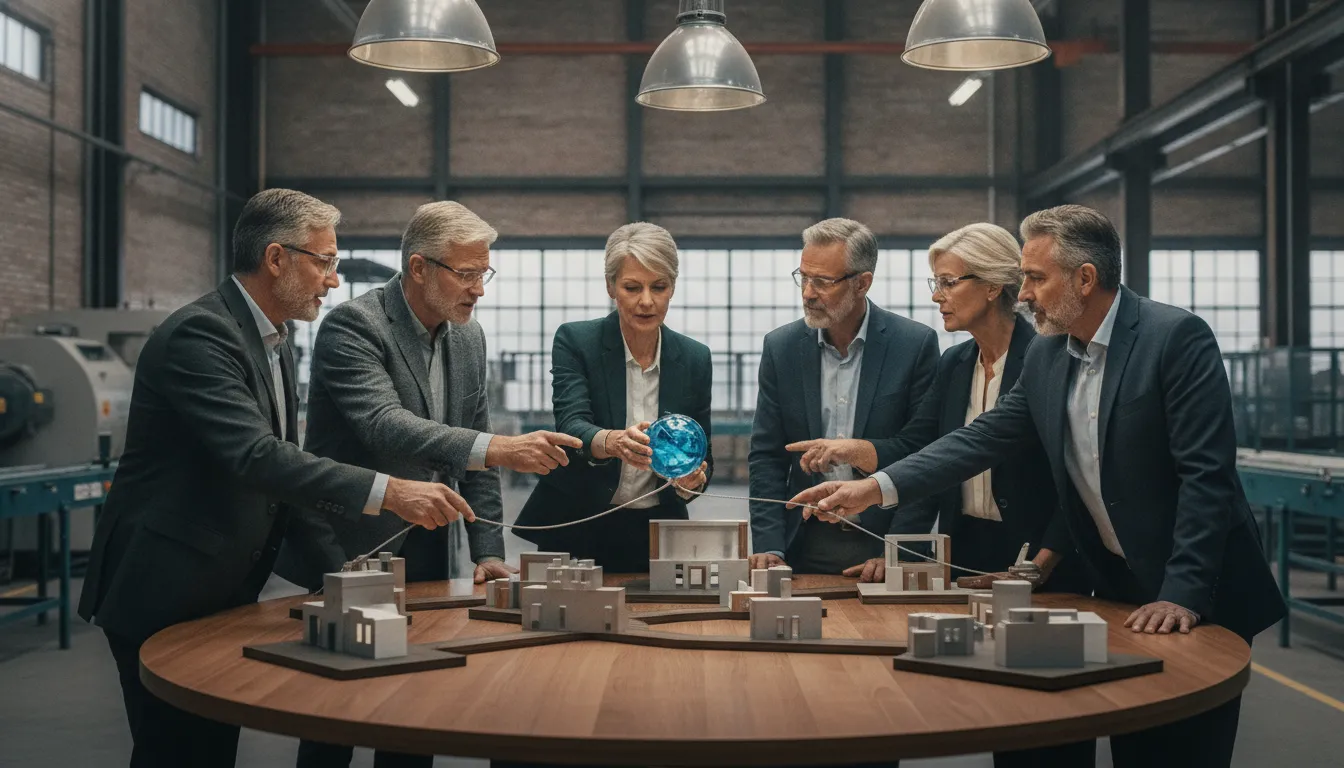

Capital project management for food manufacturing is not simply a matter of delivering a new line, expanding a facility, or replacing aging equipment. For executive leaders, the harder job is controlling investment risk while production, food safety, engineering, procurement, quality, finance, and operations move together toward a measurable business outcome.
Effective capital project management for food manufacturing connects investment decisions to operational readiness, food safety controls, schedule logic, commissioning evidence, and post-startup value. A PMO gives leaders one governance model for decisions, risks, interfaces, and benefits so a capital program can scale without turning every plant-level issue into an executive surprise.

What Does Capital Project Management for Food Manufacturing Control?
Capital project management for food manufacturing controls the decisions and interfaces that determine whether an investment becomes usable capacity, reliable equipment, and sustainable operating performance. It joins portfolio priorities, project controls, food safety, commissioning, and benefits tracking instead of treating each workstream as a separate handoff.
A capital program can appear healthy while risk accumulates between functions. Finance may see an approved budget, engineering may see a workable design, procurement may see released orders, and operations may still lack a credible path to run the asset. The governance model must make those dependencies visible early.
At executive level, the PMO should maintain a single view of:
- the strategic reason for the investment and the outcome it is expected to create;
- scope boundaries, decision rights, assumptions, and approval thresholds;
- schedule logic across design, procurement, construction, validation, and startup;
- food safety, quality, environmental, and operational risks that affect readiness;
- resource constraints, supplier dependencies, and cross-project conflicts; and
- the measures that will confirm whether benefits were realized after handover.
This is why an embedded PMO can add value beyond a project schedule. MustardSeed's strategic project management for food and beverage approach positions governance as an operating capability, not a reporting layer added after decisions have already been made.
How Should Leaders Govern Capital Investment Before Approval?
Leaders should govern capital investment through evidence-based gates that test strategic fit, operational feasibility, risk exposure, delivery readiness, and expected benefits before funding is released. The PMO coordinates the evidence and recommendation, while accountable business, technical, quality, and regulatory owners retain final approval authority.
A disciplined front end reduces the chance that an attractive concept becomes an underdefined project. Before approval, the team should establish the problem being solved, the capacity or capability required, the consequences of delay, and the conditions that would make the investment uneconomic or unsafe.
What should an executive capital gate test?
| Capital gate | Executive question | Evidence to require |
|---|---|---|
| Opportunity and strategy | Why is this investment needed now? | Strategic rationale, demand assumptions, alternatives, and consequences of deferral |
| Definition and feasibility | Can the organization deliver and operate the proposed solution? | Scope basis, site constraints, utility capacity, food safety considerations, resources, and risk profile |
| Funding and execution readiness | Is the plan mature enough to authorize delivery? | Cost basis, schedule logic, procurement strategy, contingency, owners, and decision rights |
| Commissioning readiness | What must be true before the asset can support production? | Test evidence, training, procedures, quality release criteria, maintenance readiness, and approved cutover plan |
| Benefits review | Did the investment produce the intended result? | Baseline measures, ownership, post-startup performance, variance explanation, and corrective actions |
These gates should not become bureaucracy for its own sake. Each one should answer a decision that cannot be safely deferred. A concise gate pack, supported by an integrated risk and dependency view, gives leaders a basis for approving, conditioning, pausing, or redirecting capital.
For organizations that need to build this operating model, PMO implementation guidance can help connect governance design to repeatable project execution.
How Can a PMO Integrate Food Safety Into Delivery Controls?
A PMO integrates food safety by translating applicable quality and regulatory requirements into project decisions, acceptance criteria, risk ownership, and readiness evidence. It does not replace the accountable quality or regulatory function. Instead, it makes food safety dependencies visible in the schedule and escalates unresolved issues before they become startup or production risks.
For human-food facilities, the eCFR provisions in 21 CFR Part 117 establish current good manufacturing practice and preventive-control requirements. A project team should work with qualified owners to identify which applicable requirements affect the design basis, materials, utilities, sanitation, process controls, documentation, and release plan.
What food safety questions belong in the project plan?
- Which design decisions affect hygienic zoning, sanitation, allergen control, or product flow?
- Which utilities, materials, surfaces, and equipment interfaces need quality or regulatory review?
- What construction or installation activities could affect active production, and how will they be contained?
- Which tests, records, training, procedures, and approvals are prerequisites for release?
- Who can recommend a change, who must assess it, and which accountable owners approve it?
Embedding these questions in the work breakdown structure prevents a late compliance scramble. The PMO can maintain the dependency log, schedule the review points, and report exceptions. The quality and regulatory owners determine the technical or regulatory disposition. That separation preserves accountability while giving executives a reliable view of readiness.
MustardSeed's food manufacturing project management resources provide adjacent context for coordinating operational requirements without treating compliance as an afterthought.
How Do Cross-Functional Teams Control Schedule and Interface Risk?
Cross-functional teams control schedule risk by managing interfaces, not only activities. A credible schedule shows how engineering decisions affect procurement, how supplier dates affect installation, how installation affects testing, and how testing affects production release. The PMO uses that logic to focus leadership attention on the dependencies most likely to change the outcome.
Food manufacturing capital programs commonly involve plant operations, quality, engineering, maintenance, procurement, finance, information technology, safety, contractors, equipment suppliers, and senior sponsors. A weekly status meeting that only reads activity percentages will miss the disagreements and assumptions that drive delay.
Which controls make schedule risk visible?
- Integrated master schedule: connect design, long-lead procurement, construction, testing, training, and startup milestones.
- Interface register: record every handoff between functions, suppliers, systems, and work packages, with a named owner.
- Decision log: show the decision required, options, due date, impact of delay, and accountable approver.
- Risk and issue register: separate uncertain future events from active problems, with mitigation and escalation thresholds.
- Look-ahead planning: identify constraints that must be removed before the next execution window.
- Change control: assess scope, cost, schedule, quality, safety, and benefits impact before authorization.
Teams can strengthen this discipline with an integrated master schedule and a clear risk-management approach for manufacturing construction. The purpose is not to make the plan appear precise. It is to expose the logic that leaders need to challenge.
A PMO should also distinguish a schedule variance from a forecast threat. A missed task may be recoverable. A late design decision that affects a long-lead item may be a program-level threat. Escalating based on consequence and dependency, rather than noise, helps executives act earlier.
What Should Commissioning and Handover Prove?
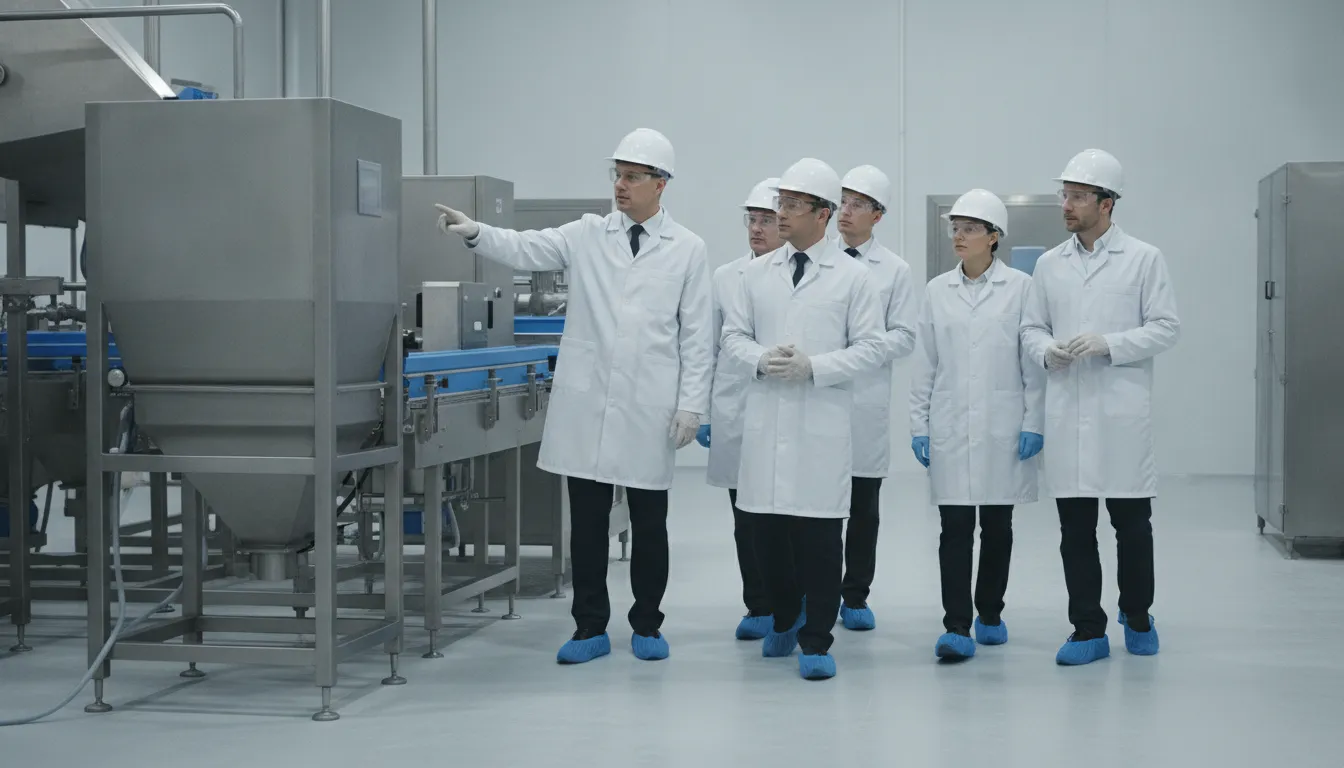
Commissioning and handover should prove that the delivered asset can be operated safely, maintained effectively, supported by trained people, and measured against the business case. Completion is not the same as readiness. The PMO should coordinate evidence across technical, operational, quality, maintenance, training, and financial owners before the project is closed.
How can leaders define commissioning readiness?
A commissioning plan should describe the sequence from installation completion through testing, issue resolution, operational trials, release, and transition to the permanent owner. The exact evidence depends on the asset and the organization's quality system, but readiness commonly requires:
- approved test protocols and documented results;
- resolved or formally accepted punch-list items;
- completed operating, cleaning, maintenance, and emergency procedures;
- trained operators, supervisors, technicians, and support functions;
- confirmed spare parts, maintenance ownership, and response arrangements;
- quality and regulatory review of required records and release conditions; and
- a cutover plan that protects production continuity and defines escalation paths.
Using a stage-gate project management model keeps commissioning decisions explicit. If a condition is not met, the accountable owner can decide whether to remediate, accept a bounded risk, or delay release. The PMO records that decision and tracks the resulting action rather than hiding it in a status note.
Handover should also transfer knowledge. A project that leaves behind an undocumented asset, unclear ownership, or an incomplete maintenance strategy has transferred responsibility without transferring control. That creates operating risk after the project team has moved on.
How Do Leaders Realize Benefits After Startup?
Leaders realize benefits by defining the baseline, naming the benefit owner, measuring the result after startup, and acting on variance. Benefits realization turns a capital project from a completed deliverable into an accountable business change. The review should test actual operating performance, not simply confirm that the asset was installed.
Benefits can include capacity, yield, labor productivity, service level, resilience, quality performance, cost avoidance, or risk reduction. Each benefit needs a clear measurement method and a realistic time horizon. Some value appears at startup; other value depends on training, stable production, customer qualification, or a later process change.
What should a post-startup benefits review include?
- Baseline: what was true before the investment, using an agreed measurement period.
- Target: the result approved in the business case, including assumptions and timing.
- Actual: performance after the asset reaches an appropriate level of stable operation.
- Variance: the gap between expected and actual results, with evidence rather than opinion.
- Action: the operational, technical, or commercial change required to close the gap.
- Owner: the person accountable for delivering the next action and reporting progress.
Benefits tracking should not be used to punish a project team for assumptions that changed outside its control. It should create an honest feedback loop. If demand, costs, regulations, or operating conditions changed, the executive team can decide whether to revise the business case, adjust the operating model, or pursue a different benefit.
An embedded PMO can keep this review connected to the wider portfolio. A project that misses a local target may still protect a strategic capability. Another project that meets its installation date may fail to deliver the expected value. Comparing both delivery and benefits gives leaders a more useful view of capital performance.

How Can Leaders Scale Capital Control Across a Food Manufacturing Portfolio?
Leaders scale capital control by standardizing the minimum governance model while allowing each plant and project to retain the technical detail it needs. A portfolio PMO provides common definitions for risk, schedule health, decision status, readiness, benefits, and escalation. This makes projects comparable without forcing every site into an identical delivery method.
At portfolio level, executives need to see more than individual project dashboards. They need to understand whether projects compete for the same engineers, shutdown windows, suppliers, utilities, quality resources, or funding. Portfolio visibility also helps leadership sequence investments when the organization cannot execute every approved project at once.
Which portfolio practices protect capital capacity?
- Use one intake and prioritization process for new capital opportunities.
- Apply consistent gate criteria while allowing technical owners to define project-specific evidence.
- Aggregate risks that appear small on individual projects but material at portfolio level.
- Protect scarce resources by sequencing work around plant operations and critical suppliers.
- Review benefits across projects so lessons from one site improve the next investment.
- Escalate decisions with clear options and consequences, not only status labels.
Organizations can scale this approach through PMO as a Service, outsourced PMO support for manufacturing projects, or a more focused operational project management model. The right model depends on the internal team's capacity, the complexity of the portfolio, and the speed at which governance must be established.
For senior leaders, the central test is simple: can the organization identify a capital risk early enough to make a meaningful decision? If not, the portfolio needs better integration between governance, delivery, operations, and benefits.
What Questions Do Leaders Ask About Food Manufacturing Capital Projects?
Leaders usually ask how to balance investment speed with food safety, how to assign approval rights, how to forecast schedule risk, and how to prove value after startup. The answers depend on the asset and operating context, but a consistent governance model gives executives the evidence needed to make timely, accountable decisions.
Who should own capital project governance?
The sponsor remains accountable for the investment outcome, while the PMO coordinates governance, reporting, risks, dependencies, and decision preparation. Technical, quality, regulatory, finance, and operations leaders retain authority for decisions within their responsibilities. The PMO should make ownership explicit rather than becoming a substitute for accountable leadership.
How does food safety affect a capital project schedule?
Food safety requirements can affect design choices, materials, utilities, sanitation, installation sequencing, testing, documentation, and release. The project schedule should include the reviews and evidence needed by qualified quality and regulatory owners. Treating those activities as late approvals creates avoidable schedule risk.
What is the difference between project completion and operational readiness?
Project completion confirms that contracted scope is substantially delivered. Operational readiness confirms that people, procedures, equipment, quality records, maintenance support, and decision owners are prepared to operate the asset. A project can be physically complete and still require work before production or formal handover is appropriate.
How can executives see schedule risk before a delay becomes material?
Executives need an integrated schedule, a constraint and interface view, a current risk register, and clear escalation thresholds. They should review forecast dates and decision dependencies, not only the percentage of tasks marked complete. Early visibility gives leaders more options for recovery or resequencing.
What should happen when a capital project misses its business-case target?
The team should establish whether the variance comes from changed assumptions, execution performance, operating adoption, or measurement timing. The benefit owner and sponsor can then decide whether to correct the operating model, revise the plan, accept the result, or stop further investment. The PMO should document the decision and follow through.
Can an embedded PMO support several food manufacturing capital projects?
Yes, when the PMO has a clear portfolio mandate, common reporting standards, decision rights, and enough capacity to manage both project-level execution and cross-project dependencies. The model should scale the governance layer without removing the plant-specific technical and operational ownership each project requires.
What Should Executives Do Next to Control Capital Risk?
Executives should begin with a portfolio view of current capital commitments, then test whether each project has a clear outcome, decision owner, integrated schedule, food safety path, commissioning plan, and benefits baseline. Where those elements are missing, a focused PMO intervention can establish control before risk becomes expensive to reverse.
MustardSeed helps organizations in food and beverage and other complex industries connect strategy, delivery, and measurable results. Its foundational project management services can establish the core controls, while a flexible embedded model can add operational or strategic capacity as the capital portfolio changes.
Talk to a PMO Expert about controlling capital project risk at scale.
Contact page: https://www.mustardseedpmo.com/contact-our-project-management-experts-mustardseed-pmo.