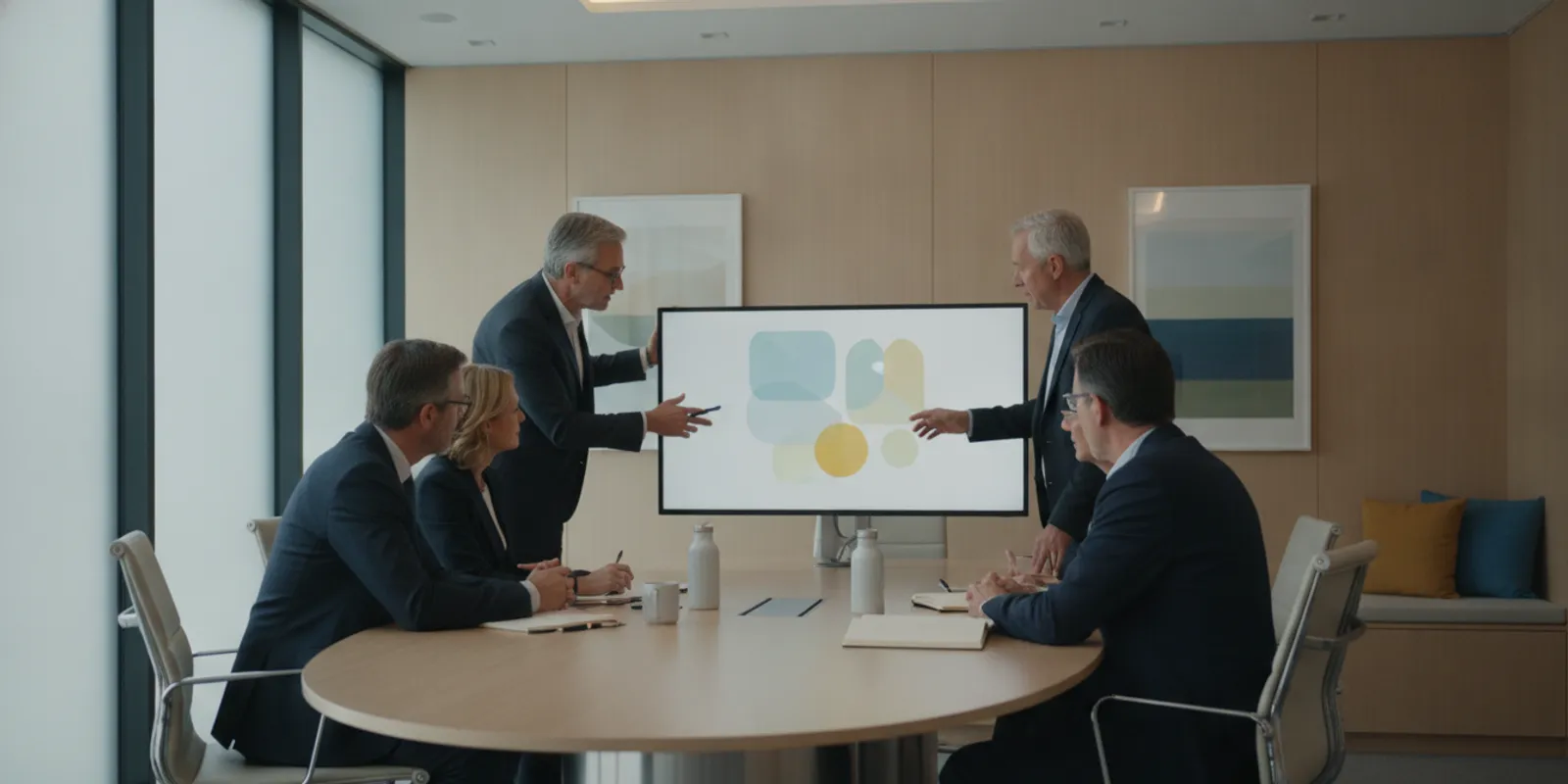

A pmo pharma function helps leaders coordinate complex work across research, development, manufacturing, quality and business teams. Its value is not simply producing schedules. A well-designed pharmaceutical PMO makes governance clear, surfaces dependencies early, organises portfolio information and supports timely decisions while specialist teams retain accountability for technical and regulated work.
Discuss your project management needs
A PMO provides an operating layer for projects and programmes. The exact remit depends on the organisation, its development stage and the work in its portfolio. It may set shared governance and reporting practices, support project leaders, and help executives see where priorities, capacity and decisions intersect. This is especially useful when a portfolio contains work at different stages, from early research through process changes and launch preparation.
The PMO should not replace functional or quality authority. Scientists own scientific judgement; quality and regulatory professionals own their specialist responsibilities; sponsors make business decisions. The PMO connects these roles through a visible plan, agreed decision points and a reliable way to escalate issues.
This boundary is important. The PMO supports disciplined execution, but it does not approve a submission, determine product quality or guarantee a regulatory outcome. Leaders looking for a diagnostic starting point can use a structured PMO assessment to identify where visibility or ownership is weakest.
Pharmaceutical initiatives often cross functions and phases. A development or manufacturing change may involve research, clinical, regulatory, quality, supply, technical operations and commercial stakeholders. Each group can have its own plans and obligations. A missed handoff can affect several downstream milestones even when each team is completing its own tasks.
A joined-up coordination approach connects work packages to decision gates, shows dependencies between functions and makes owners explicit. MustardSeed's pharma and biotech programme-management approach is relevant to organizations that need cross-functional planning around early development. The general principle applies more broadly: plans need to accommodate uncertainty, because dates and assumptions can change as evidence emerges.
The right level of control is neither a sprawling set of reports nor an informal collection of status updates. Teams need enough common structure to make risk and decisions comparable, while preserving discipline-specific methods that already work. In the UK, teams may call an initiative a programme; in the US, program is common. Either way, use one integrated view for major dependencies and preserve workstream detail in the appropriate functional tools.
Governance is the agreed system for directing work and making decisions. The PMO can design and facilitate the process, but sponsors and accountable functions must retain the decisions assigned to them. Make the structure usable by defining who decides, what information is needed and when an issue moves up a level.
A useful decision paper is short enough to read before the meeting. It states the decision needed, the deadline, options considered, consequences, assumptions and accountable recommender. If a question requires specialist judgement, the paper should identify the responsible expert rather than presenting the PMO's interpretation as a conclusion.
Decision logs help when they are concise and controlled appropriately. They should point to the current decision and related actions, not create an unofficial substitute for required records. Organizations building common processes can draw on foundational PMO services to shape governance, templates and working practices around their needs.

Compliance coordination means ensuring that relevant activities, owners, evidence needs and review points are represented in the integrated plan. It does not mean that the PMO interprets regulations on behalf of qualified specialists or approves controlled documentation. Applicable requirements vary by activity and jurisdiction, so the responsible quality and regulatory professionals determine them.
For each relevant workstream, ask the accountable function to identify planned deliverables, dependencies, review timing and escalation triggers. The project plan can then show when input is needed and what downstream work depends on it. Quality and regulatory colleagues determine the applicable requirements and authoritative records to use. The U.S. Food and Drug Administration provides agency information and resources; teams should rely on the applicable official guidance and their own qualified regulatory colleagues when determining requirements.
Keep controlled information in approved systems. A project dashboard may show that a review is due or that an approved milestone is at risk, but it should not become a shadow repository for regulated content. Agree access, naming conventions and update responsibilities with responsible functions before reporting begins.
For example, if a submission-related review depends on five functional inputs, the PMO can map each input owner, due date, review period and dependency. If one input slips, the PMO can show the effect on later work, identify which dates are now assumptions, and bring the decision to the right forum. The accountable experts still determine content and readiness. This coordination model supports traceable project execution while keeping records within approved processes.
To make this work, establish a simple interface agreement with each function. Specify what status the PMO needs, how often it is refreshed, where the source record lives, who confirms a change and what event warrants escalation. That agreement prevents the PMO from requesting sensitive detail it does not need and gives functional leads a predictable way to raise a timing concern.
Useful reporting helps leaders act. It should distinguish facts from estimates, highlight changes since the previous review and identify decisions that cannot wait. Avoid reporting every task at executive level. Keep detailed work plans with teams and bring forward signals that influence portfolio choices.
| Reporting element | What it tells leaders | Useful PMO practice |
|---|---|---|
| Milestone outlook | Whether key dates remain achievable | Show baseline, current forecast, change and confidence rationale |
| Dependencies | Where one team's output gates another team's work | Name delivering and receiving owners, plus the needed date |
| Risk and issue status | What may affect objectives or is already affecting delivery | Separate risk from issue; show owner, response and escalation trigger |
| Capacity and resources | Whether priority work can be staffed and sequenced | Surface competing demand and the decision required |
| Decisions and actions | What is unresolved and who must act | State decision owner, due date and consequence of delay |
Define status terms before aggregating data. If one team calls a milestone green because no task is late while another uses it to mean the forecast is credible, the portfolio view is misleading. Agree simple definitions, a reporting cut-off and how exceptions are escalated. A dashboard must also distinguish a date supported by an approved plan from a working estimate.
Reporting tools should serve the operating model, not dictate it. A dashboard is only as reliable as its owners, definitions and update rhythm. Organizations can build views around decisions using existing systems; a PMO should avoid asking teams to maintain duplicate sources. For more on designing executive views, see the guide to Smartsheet dashboards for project visibility.
A monthly portfolio pack might contain a one-page decision summary, a milestone trend, the three most material cross-project dependencies, capacity conflicts and a short exception list. Each exception should state the change, its consequence, the action owner and the date by which leadership must respond. A pack that simply reproduces project updates creates reading work without improving control.

Risk management becomes actionable when risks are linked to objectives, dependencies and decisions. A list with severity labels alone does not tell leaders what to do next. For material risks, record the cause, potential effect, owner, response, trigger and review date.
Separate an active issue from a future risk. An issue needs containment, resolution or a decision now; a risk needs a response that reduces likelihood or impact. Both need ownership and follow-up, but mixing them can obscure urgency. Review actions at the same cadence as the relevant decision forum, not only when a monthly report is due.
Portfolio risk also includes conflicts between initiatives. Several individually manageable projects may compete for the same specialist reviewers, equipment or decision-makers. The PMO can make that demand visible and present sequencing options. Leadership then decides which work takes precedence. A capacity view should show the constrained role, time window and competing commitments, not just a red resource indicator.
Consider a hypothetical review bottleneck: two programmes need the same specialist group during one approval window. The PMO maps when each input is needed, checks whether either downstream milestone has flexibility, and presents options such as resequencing work or securing additional approved capacity. It does not choose which technical review to shorten. The functional leader and sponsor decide, with the implications made explicit.
Start with the operating problem, not a template. A PMO introduced to address late decisions needs a different first intervention from one addressing fragmented portfolio reporting or unclear programme ownership.
A short, specific pilot is more informative than a broad rollout before roles are settled. Give the pilot a sponsor, defined boundaries, a review date and a usefulness test, such as whether decision owners receive consistent information in time to act. Keep a change log for the operating model so teams can distinguish deliberate revisions from inconsistent use.
During the pilot, test a complete reporting cycle rather than a single launch meeting. Collect baseline information, agree the cutoff date, prepare the portfolio view, hold the decision forum, and track whether actions close by their due dates. Afterward, ask where information was missing, duplicated or too late. This cycle reveals whether the process works under normal operating pressure.
Organizations can compare a focused internal model with flexible external support. Ask which capabilities must remain internal, where capacity is constrained and how quickly the operating rhythm needs to become consistent. A flexible operational PMO model may help provide execution capacity while an organization develops its own routines. For a broader comparison, consider when PMO consulting or an internal PMO fits the operating need.
Measure outcomes that reflect the problem the PMO was asked to address. Do not rely on activity counts such as meetings held or reports issued. Consider whether decision latency is improving, whether forecast changes are explained earlier, whether dependency owners are clear and whether escalation reaches the right level in time.
Use a baseline and regular review. Measures may include the age of unresolved decisions, overdue critical actions, forecast variance at key milestones, or the proportion of material risks with an owner and response. Define each measure before collecting it: what counts as a decision, when its age starts, and which milestones are in scope. Measures should prompt investigation, not encourage teams to hide uncertainty or manipulate status.
Combine data with direct feedback. Ask sponsors whether reporting supports choices, and ask project teams whether the process reduces ambiguity or creates duplicate administration. If it adds friction without improving coordination, simplify it. An occasional review of meeting attendance and pack length can identify process weight, but those are diagnostic signals rather than proof of value.
Where work is still taking shape, a PMO can make uncertainty explicit instead of forcing every activity into a fixed-date plan. For a biotech startup, that may mean clarifying decision gates, owners and evidence dependencies before committing to a sequence of milestones. The biotech startup PMO setup guide offers a related perspective. For teams approaching an early regulatory interaction, coordination around preparation and follow-up can be considered alongside pre-IND readiness project management.
For example, suppose a team expects a key technical result before a governance review, but the timing remains uncertain. The PMO can show a range or decision window, name the owner responsible for confirming the result date, and identify which downstream tasks can proceed in parallel. It can also state what consequence follows if the evidence arrives later than expected. This gives sponsors a useful choice: preserve flexibility, adjust sequencing, or defer a commitment until the uncertainty is reduced.
Working practices should be light enough for specialists to maintain. A short agenda, a clear decision request and an action owner can be more useful than a large pack. Teams can standardize those basics while allowing each function to retain its own technical review process. A shared project management best-practices playbook can help teams align on common principles, provided local procedures and controlled records remain authoritative.
Not necessarily. A project team delivers a defined initiative. A PMO may support one programme or coordinate practices and visibility across several projects. Its remit should be stated clearly rather than assumed from its name.
The PMO can coordinate the plan, dependencies, owners and decision points around submission work. Regulatory professionals and other authorized functions remain responsible for specialist content, review and approval.
No single structure fits every organization. Some need a portfolio-level function; others need targeted programme coordination or temporary capacity. The right choice follows the scale, risk and coordination demands of the work.
Show material milestone changes, cross-project dependencies, resource conflicts, significant risks and decisions required. Keep operational detail available to delivery teams, and make the executive view concise enough to support choices.
Explore PMO support for your organization
A pharmaceutical PMO is most useful when it clarifies accountability and makes complex work easier to govern. Start with the decisions, dependencies and risks that matter, then build reporting and routines that help teams act without duplicating specialist or quality responsibilities. For a tailored discussion, contact the project management team at https://www.mustardseedpmo.com/contact-our-project-management-experts-mustardseed-pmo.