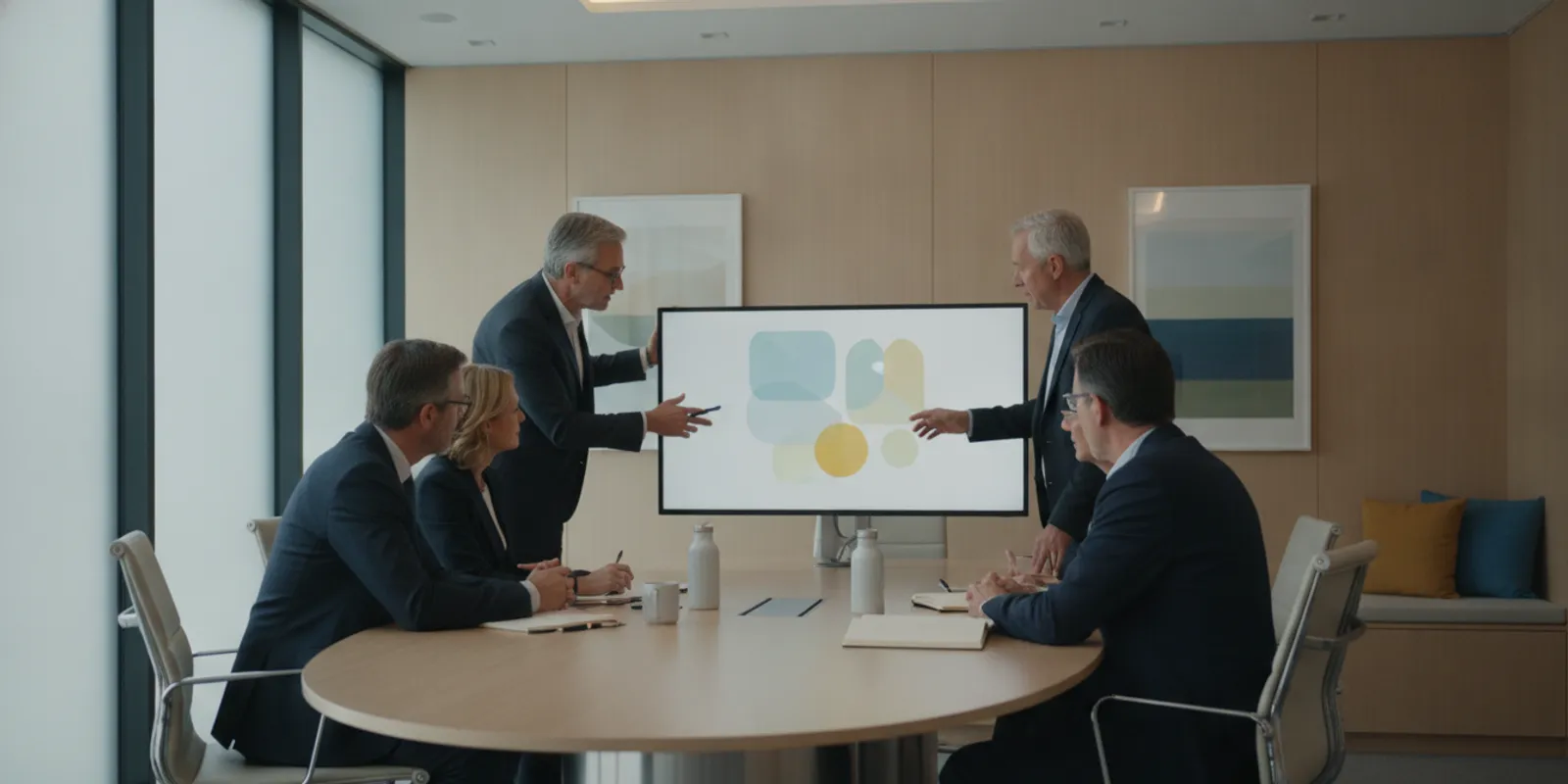

Food manufacturing project portfolio management helps leaders decide which plant, product, quality, and compliance initiatives should move forward when they compete for people, time, and operating windows. The aim is not another approval layer. It is a shared way to make trade-offs visible, connect work to priorities, and change course when conditions shift.
Discuss your portfolio priorities
A manufacturer may be managing a reformulation, packaging change, quality-system improvement, line upgrade, and audit commitment at the same time. Each can be sensible on its own. The collision appears when several need the same maintenance specialists, quality leads, operators, technical teams, or production downtime.
Project plans help teams deliver approved initiatives. Portfolio management asks a different question: given strategy, risk, and actual capacity, is this the right set of work to run together? Without a shared view, functions can approve work separately and discover the conflicts only after deadlines move or operating teams are overloaded.
A sound approach does not assume that every proposal can be scored precisely or that the highest score automatically wins. It creates consistent comparisons, makes constraints visible, and records the rationale for decisions. Quality and compliance commitments remain explicit beside growth and efficiency work.
Set the boundary before building a register. Include initiatives that require cross-functional choices, significant shared capacity, meaningful investment, or leadership oversight. Routine work can remain local if it creates no portfolio-level trade-off.
Use one portfolio view while preserving important distinctions. Mandatory work should not become discretionary merely because a commercial proposal has a larger projected return. Label obligations, identify the accountable owner, and state the consequence of missing the date. For UK operations, use local programme terminology where appropriate while keeping governance consistent across sites.
The academic paper A Proven Project Portfolio Management Process describes portfolio management as selecting and managing a set of initiatives. Use this as general context, then adapt decision rules to your obligations and operating model.
Intake turns inconsistent requests into comparable decisions. Make submission straightforward, but request enough information to understand purpose, ownership, urgency, dependencies, and resource demand. Do not demand a full business case before deciding whether an idea merits deeper assessment.
Use an initial screen to return incomplete requests with specific questions. If estimates routinely omit quality review or line access, add those prompts to the form. Capture requests that arrive informally rather than letting a side list become the real portfolio.
Agree on decision criteria before comparing proposals. A practical model combines strategic contribution, obligation or risk, value, readiness, and delivery feasibility. Define each criterion in plain language and use a consistent scale. The purpose is informed discussion, not a mathematical verdict.
| Dimension | Decision question | Evidence to record |
|---|---|---|
| Strategic fit | Which agreed objective does this advance? | Objective, contribution, sponsor |
| Obligation and risk | Is it required, or would delay create material exposure? | Requirement, owner, date driver, delay consequence |
| Value | What outcome is expected and who will verify it? | Benefit, baseline if available, measure owner |
| Readiness | Are scope, dependencies, and assumptions clear enough? | Open decisions, confidence, evidence needed |
| Feasibility | Can required skills and operating windows be made available? | Role demand by period, site constraints |
| Sequencing | What must happen first, and what can move? | Prerequisites, gates, earliest practical start |
Score only when the organization can explain what a score means. A strategic-fit scale might run from no clear connection to a direct contribution to a named objective. Do not compress a specific compliance obligation into a single number if doing so hides the control or owner. Keep evidence and rationale beside any score.
Separate hard constraints from preferences. A required commitment date, validated production window, or prerequisite may constrain sequencing. A preferred launch month may be negotiable. This distinction prevents a stakeholder preference from silently becoming an immovable deadline.
A portfolio is not feasible simply because each initiative has a lead. Make capacity visible by role and period. A project may need a quality specialist for review, an operations lead during a line trial, maintenance support during planned downtime, and technical or packaging input before launch. Those people also have operational responsibilities and other work.
Start with roles that repeatedly constrain delivery. Ask functional leaders for realistic availability, not theoretical full-time capacity. Account for shifts, leave, routine duties, and site schedules. Use ranges when estimates are uncertain, and record who supplied them and when they should be refreshed.

Compare demand and supply during the periods when work is needed. A role-by-month view can expose conflicts earlier than a project count. If two initiatives need the same quality specialist before launches, leaders can sequence them, add qualified capacity, adjust scope, or accept a later date. Calling both urgent does not resolve the conflict.
Capacity is an estimate, not a promise. Revisit it when scope changes, a key person becomes unavailable, an operating constraint shifts, or a new obligation enters the portfolio.
Dependencies connect work owned by different teams. A packaging decision may need to precede a line trial; a process change may require quality review; a system update may enable reporting across sites. Record each relationship between deliverables rather than burying it in one project plan.
For each material dependency, name the providing and receiving owners, expected date or decision point, and effect of delay. Note whether the date is an assumption or a confirmed commitment. For cross-functional or cross-site dependencies, identify someone with authority to resolve ambiguity.
Sequence work around logical order and operating reality. Several technically sound plans may still compete for the same production window. Consider pilots, phased implementation, or a different order, while preserving required controls and intended outcomes.
Use a small set of clear states: proposed, assessed, approved, active, paused, and closed. Define each. Paused work needs an owner, reason, review date, and restart condition; otherwise it can consume attention while appearing inactive.
Governance should respond to material change without turning every status update into an approval meeting. Separate delivery discussions from portfolio decisions. Project teams resolve execution detail; portfolio forums address priority, capacity, dependencies, resource trade-offs, and escalation.
A regular portfolio review can examine near-term changes and decisions. A periodic strategic review can ask whether the mix still supports business objectives. Set frequency according to the pace of change and decision needs rather than habit.
Send consistent pre-reads. For each initiative show status, next milestone, forecast change, key risk or dependency, capacity issue, decision needed, and owner. Use exception-based discussion so stable work does not take the same meeting time as a project requiring a choice.
Record each decision, rationale, owner, date, and follow-up conditions. Examples include admitting work to the active portfolio, moving a start date, changing scope, reallocating a constrained role, or stopping work. Deferred choices also need the missing information and a review date.
Reporting should support action, not merely describe activity. A concise view answers four questions: Is the mix right? Can the organization deliver it? What changed? Which decisions are needed now?
A red status alone is not useful. Explain what changed, how other initiatives are affected, what options exist, and what decision is required. Where estimates are uncertain, show that uncertainty and when it can be reduced.

Begin with a bounded slice, such as cross-functional product changes or initiatives competing for a particular specialist group. A pilot should test decisions, not just a template. Keep delivery moving while agreeing on minimum information and a practical review rhythm.
Do not wait for perfect data or force every initiative into a new process at once. Early reviews can reveal unclear ownership, weak estimates, and missing decision rights. Improve those fundamentals as part of the rollout. A PMO assessment can provide a structured starting point for examining current practices; leaders should still make the portfolio choices that fit their own operations.
Portfolio control does not replace project planning, quality systems, or functional expertise. It connects choices across initiatives. For the execution layer in this sector, see MustardSeed’s food and beverage project management information. Related topics include PMO maturity, PMO as a service, and when to outsource a PMO.
No. The need depends more on competing initiatives and shared constraints than on company size. A smaller manufacturer may still face repeated conflicts over the same specialists or production windows.
Use shared definitions where they aid comparison, but preserve distinctions between mandatory commitments, risk reduction, and discretionary opportunities. A common model should expose assumptions, not flatten unlike work into a misleading score.
Match the cadence to the pace of change and decisions required. Address urgent capacity or dependency changes promptly, with a regular forum for broader review and a less frequent check of strategic fit.
Start with the roles and periods creating the greatest constraints. Use ranges, record their source and uncertainty, and improve estimates as teams learn. Transparent estimates are more useful than unsupported precision.
For tailored discussion, use https://www.mustardseedpmo.com/contact-our-project-management-experts-mustardseed-pmo.
Discuss a practical portfolio approach
When plant, product, quality, and compliance initiatives compete for capacity, a transparent portfolio process helps leaders make deliberate trade-offs and keep delivery aligned with operational priorities.