


A large food manufacturer partnered with MustardSeed to improve visibility, prioritization, and cross-functional coordination across its Foodservice portfolio. The business was managing a high volume of customer-driven work with constantly shifting priorities, but functions lacked a centralized way to see active projects, align resources, and make fast execution decisions.
To address this, the organization implemented a fully customized dashboarding and prioritization system in Smartsheet, supported by weekly cross-functional prioritization and project management coordination.
Within weeks, the organization was able to:
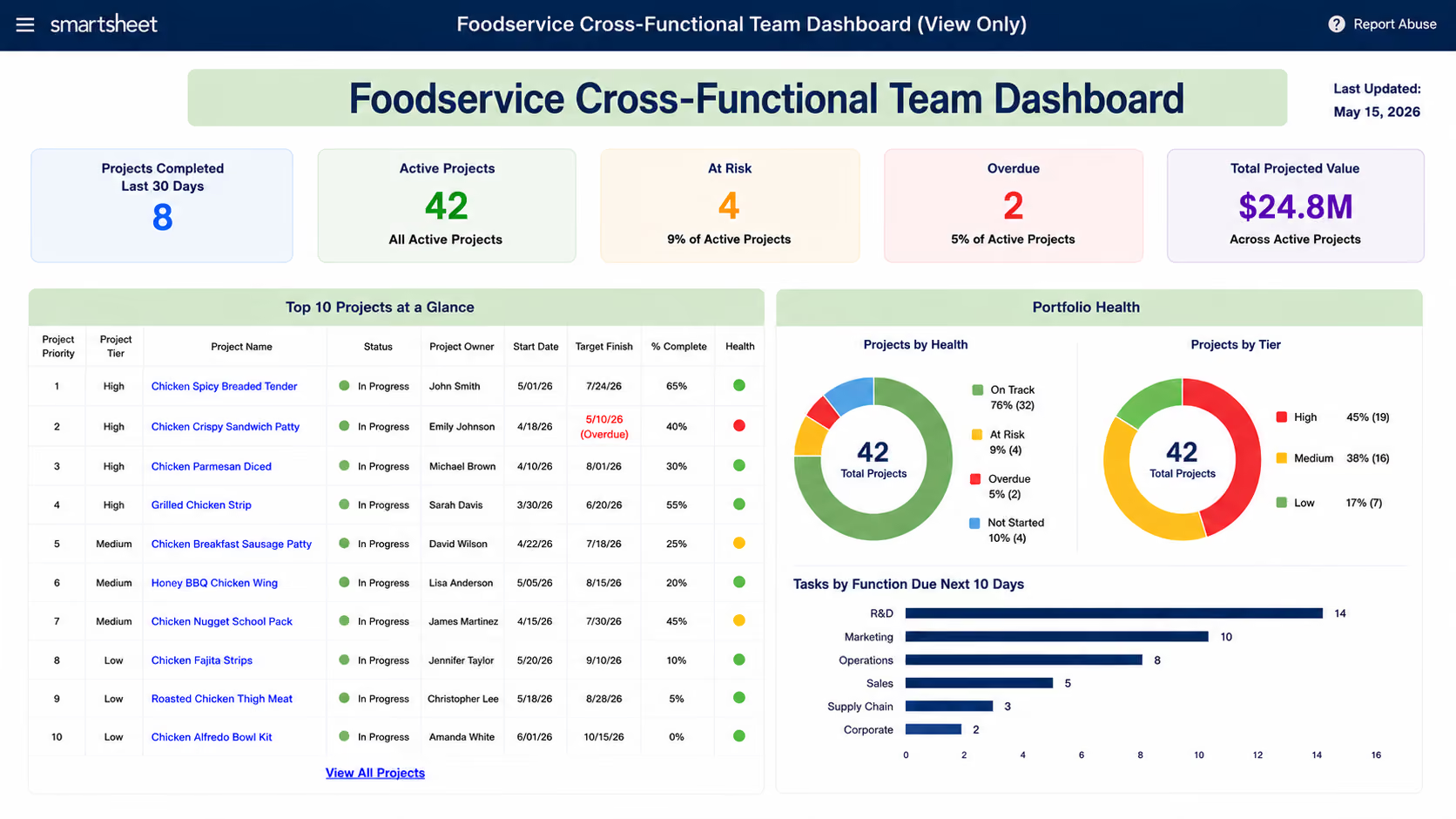
The dashboard became a centralized operational view of the portfolio, helping leadership quickly identify what mattered most and where resources needed to focus.
In Foodservice manufacturing, priorities can change daily. Customer requests, commercialization initiatives, and product opportunities often compete for the same resources. As activity increased across multiple product categories and customer programs, leadership needed a way to quickly understand which opportunities required immediate attention and where resources should be focused.
In this case, roughly 60–70% of the active portfolio consisted of customer responder projects, creating a highly reactive operating environment.
The organization was facing several common challenges:
Without a shared operational view, the organization was spending too much time reacting and not enough time driving execution forward.
MustardSeed worked alongside the Foodservice team to build a centralized dashboarding and prioritization structure designed specifically for a fast-moving manufacturing environment.
The new system included:
This gave leadership and cross-functional stakeholders one place to:
Instead of relying on disconnected updates and reactive conversations, the organization could work from a shared operational picture.
The dashboarding structure made prioritization significantly faster and more consistent.
Leadership could quickly identify:
This became especially important during a high-value customer opportunity estimated at $1.5M. The dashboard allowed leadership to quickly identify the opportunity's priority relative to all other active work, align resources around it, and maintain momentum without disrupting other customer commitments.
For the first time, leadership had a centralized, real-time view of active Foodservice work.
The dashboards created:
This reduced time spent searching for updates and increased time spent executing against priorities.
With clearer prioritization and visibility:
The organization also advanced 3.5–4.0 million lbs of business opportunities within a short timeframe while maintaining alignment across all teams.
The dashboarding process also improved how resources were deployed across the organization.
Leaders could dynamically shift work based on:
This helped eliminate bottlenecks and prevented high-priority work from sitting with a single individual or function.
The result was faster execution without increasing internal headcount.
Beyond operational improvements, the shift changed how the various departments worked together day to day.
Each team had:
Within R&D specifically, collaboration improved as the department began working more dynamically across shared priorities instead of fixed ownership structures.
From the customer perspective, the difference showed up in responsiveness. The organization was able to respond faster, maintain momentum across multiple opportunities, and create a stronger customer experience during high-priority engagements.
In high-variability Foodservice manufacturing environments, speed depends on visibility.
By centralizing project visibility and introducing structured prioritization through dashboarding, the organization improved:
Most importantly, leadership gained a real-time operational view of the portfolio, allowing the organization to respond faster without losing control of execution.
We respect the privacy of the organizations that trust us to embed within their teams. For that reason, we do not publicly disclose client names or partner names in our case studies. If you would like to verify our impact and speak directly with a reference, we are happy to facilitate introductions.

%20Reporting.avif)